What Is a Porcelain Enamel Production Line? Process, Equipment, and Benefits
An in-depth exploration of modern industrial enameling technology, highlighting the integration of glass-to-metal fusion for superior durability.
Introduction to Industrial Enameling
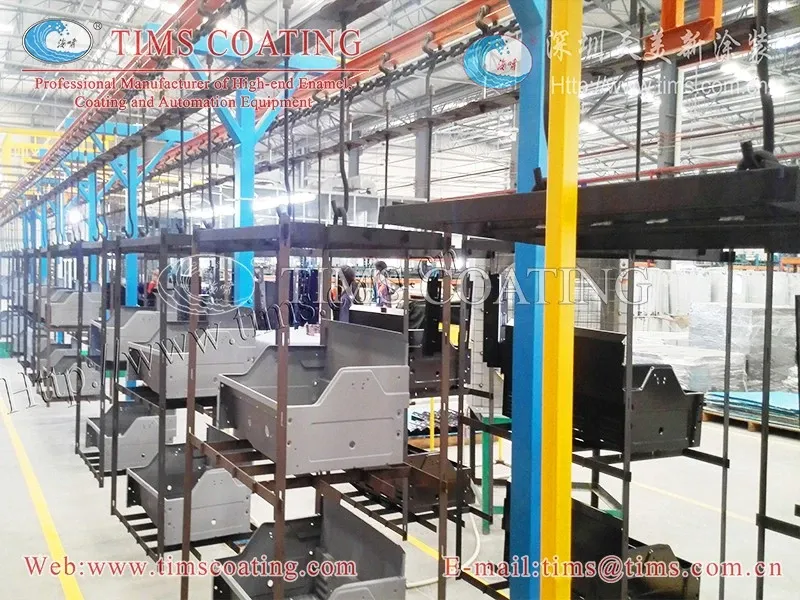
In the realm of industrial coatings, few solutions offer the unique combination of aesthetic appeal and indestructible protection provided by porcelain enamel. A porcelain enamel production line is a highly sophisticated, multi-stage industrial system designed to fuse a specialized glass frit onto a metal substrate—typically steel, cast iron, or aluminum. This process occurs at extreme temperatures, ranging from 800°C to 900°C, resulting in a chemical and physical bond that is far superior to traditional organic paints or powder coatings.
At TIMS, we recognize that modern manufacturing demands more than just a surface finish; it requires a shield against corrosion, heat, and chemical wear. The porcelain enamel production line has evolved from a traditional craft into a high-tech, automated environment. Today’s lines integrate AI-powered thickness controls, real-time defect detection, and energy-recovery systems to ensure that every workpiece—whether it is a microwave cavity, a BBQ grill, or a massive architectural panel—meets the highest global standards of quality and longevity.
Understanding the mechanics of this production line is essential for manufacturers looking to upgrade their facilities or enter the high-end appliance and architectural markets. By combining the strength of metal with the chemical stability of glass, this production system offers a sustainable, long-term solution for products exposed to harsh environments.
Core Components of a Modern Porcelain Enamel Production Line
Building an efficient production environment requires precision-engineered machinery. Each component of the porcelain enamel production line plays a vital role in ensuring the final coating is defect-free and adheres perfectly to the substrate. Below are the primary technical modules found in a professional-grade setup.
1. Advanced Surface Pre-treatment Systems
The foundation of any successful enameling process is a pristine surface. Our systems utilize either multi-stage chemical pickling or high-speed grit blasting. For water heater tanks and architectural steel, grit blasting is often preferred as it provides the microscopic roughness required for mechanical interlocking between the glass and the metal. These lines are often equipped with robotic loading systems to ensure consistent handling of heavy components.
2. Application Booths: Wet Spray vs. Dry Electrostatic
Application is where the "magic" happens. Modern porcelain enamel production lines support two primary methods:
- Wet Enamel Spraying: Ideal for complex geometries, this method uses a slurry of frit and water. Our booths feature closed-loop filtration to recycle overspray.
- Electrostatic Dry Powder: This is a "one-fire, two-coat" capable process that offers high efficiency and zero water waste, commonly used for flat panels and oven cavities.
3. The High-Temperature Firing Furnace
The furnace is the heart of the line. Operating at temperatures between 820°C and 860°C, it facilitates the fusion of glass frit into the steel. TIMS furnaces utilize radiant tube heating and high-performance insulation wool to maintain ±5°C uniformity, which is critical for preventing color variation and warping in the finished product.
The Step-by-Step Production Process
Operating a porcelain enamel production line involves a sequence of highly controlled events. Any deviation in temperature or timing can result in surface defects such as "fish-scaling" or "pinholing."
Step 1: Metal Fabrication and Degreasing
Workpieces are formed from low-carbon steel. They then enter the pre-treatment zone where oils and contaminants are removed via alkaline washing, ensuring the surface is chemically receptive.
Step 2: Surface Roughening (Grit Blasting)
The steel is bombarded with abrasive media to create a specific profile (Ra 3.5–6.0 µm). This ensures the enamel "grabs" onto the steel during the high-heat phase.
Step 3: Enamel Application
Using automatic reciprocating sprayers or robots, a uniform layer of enamel is applied. For dry powder lines, electrostatic charges ensure the powder sticks even to edges and corners.
Step 4: Drying and Firing
The "green" coating is dried in a low-temp oven to remove moisture, then enters the firing furnace. Here, the glass melts and flows, bonding with the metal to form a non-porous ceramic layer.
Why Invest in a Porcelain Enamel Production Line?
Manufacturers worldwide are shifting toward enameling due to its unparalleled performance metrics. When you implement a dedicated porcelain enamel production line, you gain several competitive advantages:
Extreme Thermal Resistance
Enamel can withstand continuous temperatures up to 500°C without fading or peeling, making it the only choice for oven interiors and BBQ components.
Chemical and Corrosion Shield
Unlike paints, enamel is resistant to acids, alkalis, and salt spray. This is essential for water heater tanks and industrial containers.
Eco-Friendly Production
Modern lines minimize VOC emissions. The materials used (glass and steel) are inorganic and fully recyclable, supporting green manufacturing initiatives.
Aesthetic Versatility
Whether you need a high-gloss finish, a matte texture, or specific decorative patterns, the enameling process delivers vibrant, UV-stable colors.
The TIMS Advantage: Innovation in Coating Technology
TIMS is a leader in the design and manufacturing of automated coating systems. Our porcelain enamel production line solutions are engineered for high throughput and energy efficiency. One of our primary innovations is the "Ultra-Flexible Production Line," which allows a single line to process multiple product models—ranging from 5L to 500L water heater tanks—without significant downtime for changeovers.
We prioritize sustainability through our patented waste heat recovery systems. By capturing exhaust heat from the enameling furnace and redirected it to the drying ovens, TIMS systems reduce natural gas consumption by up to 20%. Our porcelain enamel production line equipment is built with high-grade stainless steel and heat-resistant alloys (SUS310s), ensuring a service life that spans decades.
From powder coating systems to specialized electrophoresis lines, TIMS provides turnkey solutions that include design, installation, and lifetime technical support. Our certifications (CE, ISO9001, SGS) reflect our commitment to engineering excellence.
Final Thoughts
The transition to a high-performance porcelain enamel production line is a strategic investment in product quality and brand reputation. As industries move toward materials that offer both durability and environmental sustainability, enameling stands out as the premier choice. By choosing a partner like TIMS, you ensure that your production facility is equipped with the latest in automation, energy efficiency, and precision engineering.
Frequently Asked Questions
Q1: What materials can be processed on a porcelain enamel production line?
Most production lines are designed for low-carbon steel, cast iron, and certain aluminum alloys. The key is that the metal must be able to withstand the high firing temperatures (800°C+) without losing structural integrity.
Q2: How much energy does a porcelain enamel production line consume?
Energy consumption varies by scale, typically ranging from 50 to 5000 kW/h. However, TIMS integrates advanced waste heat recovery systems to significantly lower the operational costs and carbon footprint of our lines.
Q3: What is the difference between wet and dry porcelain enamel production line processes?
The wet process uses an enamel slurry and is excellent for complex shapes. The dry process uses electrostatic powder, which is generally more automated, reduces water waste, and allows for thicker, more uniform coatings on flat surfaces.
Q4: How long does a typical porcelain enamel production line last?
With proper maintenance, a high-quality line from TIMS can operate for over 20 years. We use corrosion-resistant materials like 304/316 stainless steel for pre-treatment and heat-resistant alloys for the furnace components to ensure maximum longevity.
Q5: Can a porcelain enamel production line be customized for different factory layouts?
Absolutely. Every porcelain enamel production line we build is custom-tailored to the buyer's specific requirements, including factory dimensions, voltage/frequency needs, and specific workpiece geometry.
Ready to Optimize Your Coating Facility?
Contact TIMS today for a tailored consultation and a complete turnkey solution for your next enameling project.